



Abstract
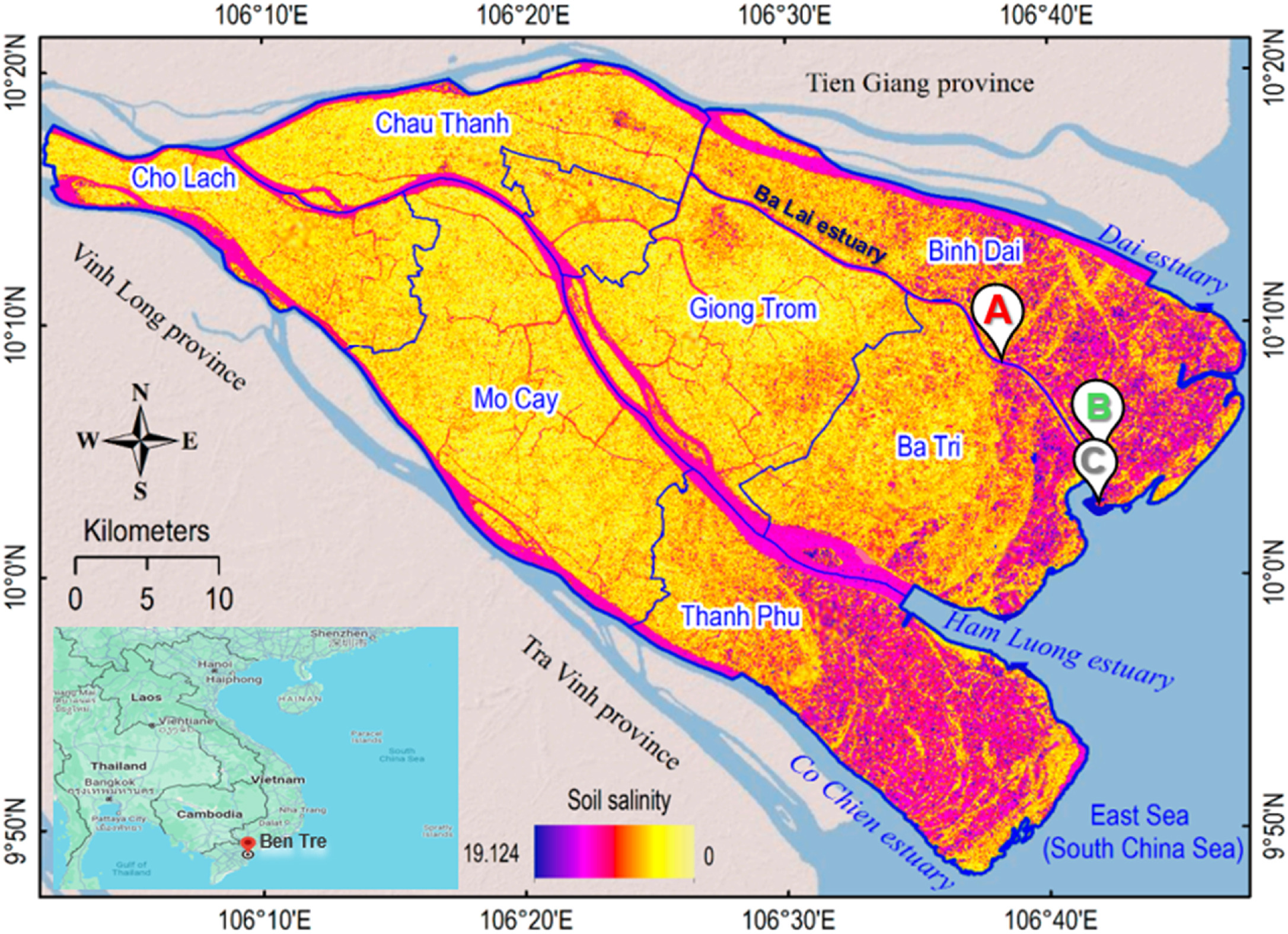
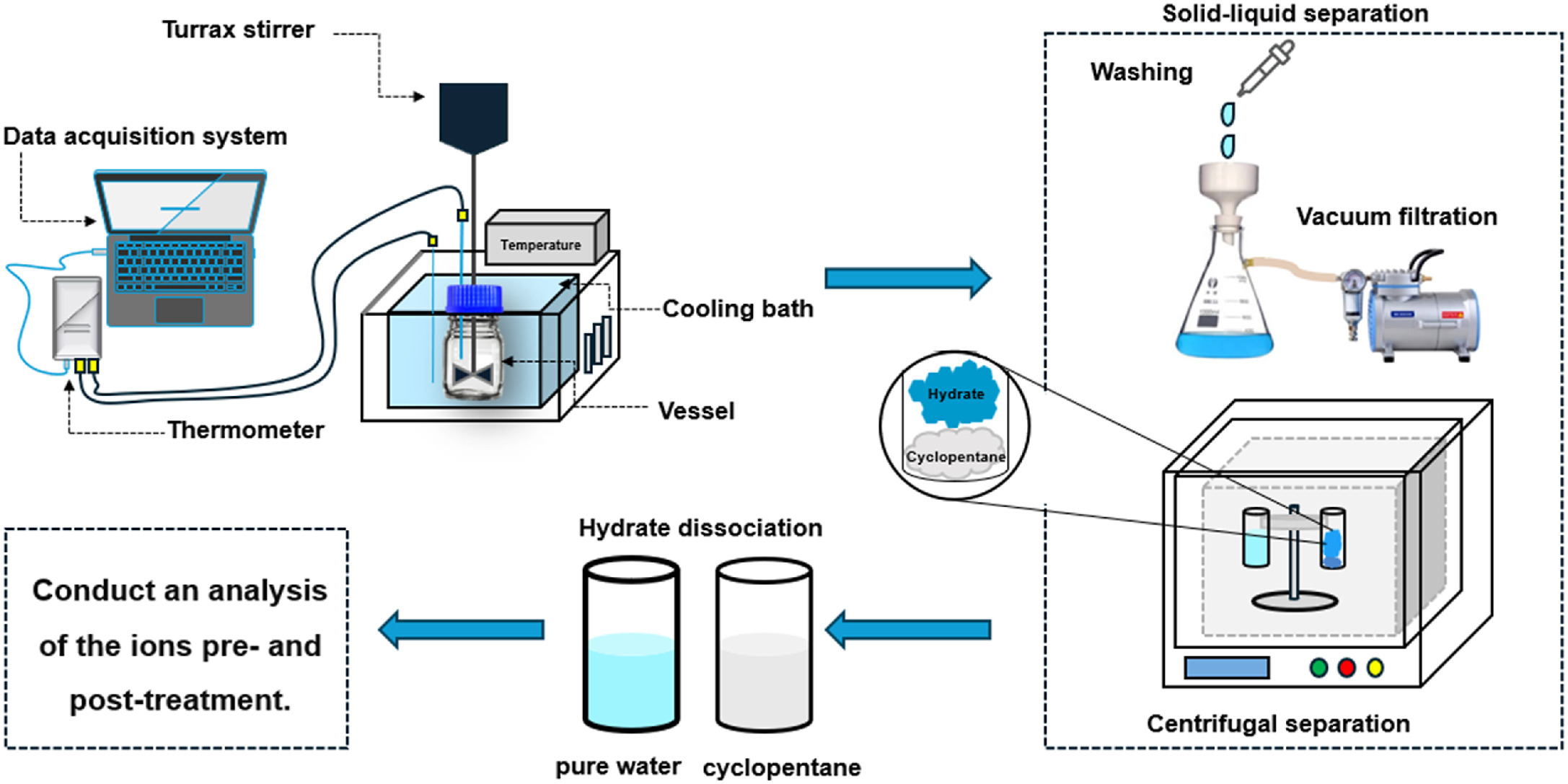
Freshwater scarcity is a critical issue in Vietnam, particularly in the Mekong Delta, a densely populated region with an agriculture-based economy. This scarcity is largely driven by saltwater intrusion during the dry season, severely affecting both agriculture and the local economy. In response, advanced desalination technologies have been proposed. In this study, we investigated the use of cyclopentane (CP), a liquid guest molecule, and 1,1,1,2-tetrafluoroethane (R134a), a gaseous guest molecule, as hydrate formers to desalinate saline water from the Mekong Delta. This study aimed to evaluate and compare the freshwater recovery efficiencies of these hydrate formers and assess the potential of hydrate technology for practical application in the region. We performed thermodynamic and kinetic investigations on sodium chloride solutions (1.0–3.5 wt%), representing the salinity levels of seawater in the Mekong Delta, to establish a laboratory-scale desalination system. The results showed a consistent thermodynamic trend: the higher concentration of samples leads to the longer time of hydrate formation to achieve the conversion of water into hydrates exceeding 60 %. Additionally, the CP and R134a hydrate structures were characterized using Raman spectroscopy, which revealed significant changes in the water peak and C–H band signal during the hydrate formation process. After a single-stage hydrate treatment using CP and R134a, the removal efficiencies for ions and total dissolved solids in saline water samples from the Mekong Delta exceeded 75 % and 70 %, respectively. These findings serve as a reference for developing a larger-scale hydrate-based desalination technology to address the challenges of saltwater intrusion in the Mekong Delta region.
Acknowledgment
This research is funded by Viet Nam National University Ho Chi Minh City (VNUHCM) under grant number B2023-18-05, to Truong-Lam Son Hai. The authors express their gratitude to Dr. Ju Dong Lee, Korea Institute of Industrial Technology for their generous support in providing the Raman Spectrometer, and hydrate apparatus equipment necessary for conducting the experiments.
Tran, Q.N., Vo, N.N.T., Pham, T.T. and Truong-Lam, H.S. (2024) Heliyon, 10(19), e38974.