
THƯ MỜI CHUỖI SỰ KIỆN KHCN SHTT ĐMST NĂM 2026
Đối tác / Hợp tác quốc tế / Tin tức
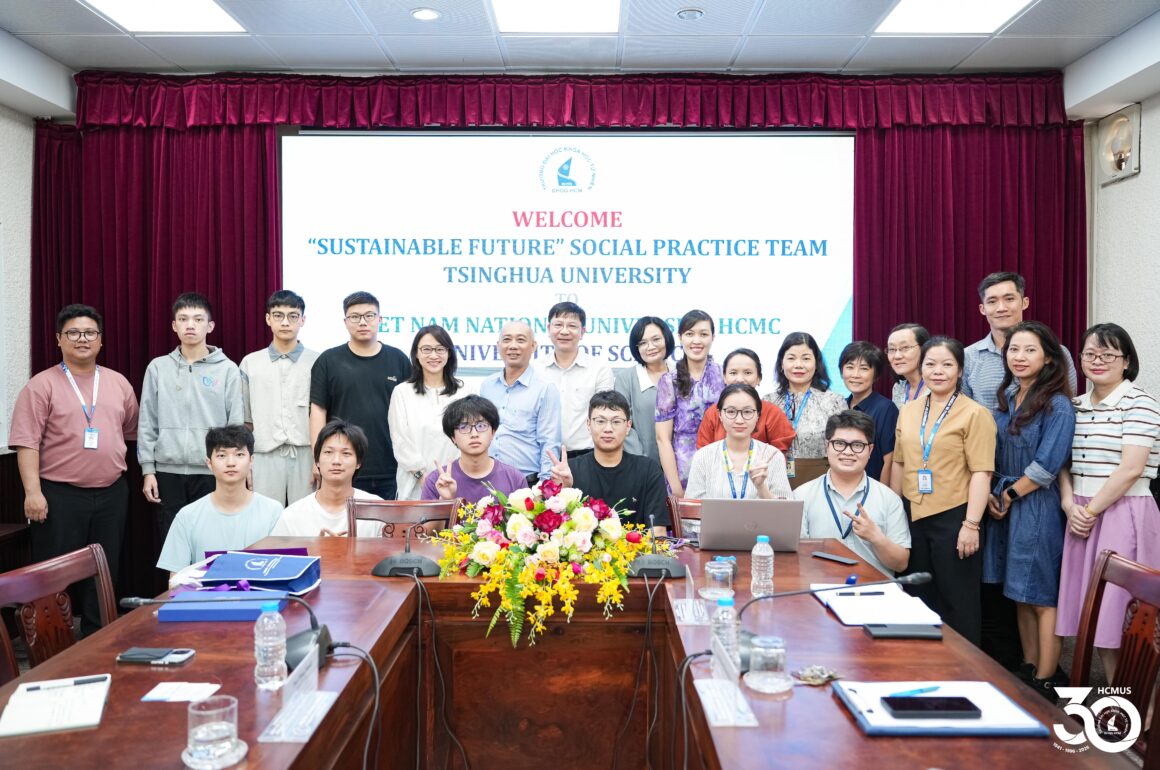
HCMUS trao đổi với Tsinghua University về công nghệ số và phát triển bền vững
Ngày 13/8/2026, Trường Đại học Khoa học tự nhiên, ĐHQG-HCM (HCMUS) có buổi làm việc với đoàn “Sustainable Future” Social Practice Team đến từ Xiuzhong College, Tsinghua University (Trung Quốc), tập trung trao đổi về ứng dụng công nghệ số trong giảm phát thải carbon, quản lý môi trường và phát triển bền vững. Tham dự buổi làm việc, phía Tsinghua University có GS. Zheng Xiaodi, Tenured Professor, Founder and Co-Director, Center for Brownfields Research, School of Architecture, Tsinghua University, cùng 07 sinh viên thuộc Xiuzhong College. Về phía HCMUS có GS.TS. Ngô Đại Nghiệp, Trưởng phòng Quan hệ đối...
Báo giá
Mời báo giá lần 2: Cung cấp hàng hóa túi Canvas chào đón tân sinh viên năm 2026 của Khoa Công nghệ Thông tin thuộc Trường Đại học Khoa học tự nhiên, ĐHQG-HCM
Kính gửi: Các đơn vị cung cấp hàng hóa tại Việt Nam Để bảo đảm sản phẩm được chào giá đáp ứng đúng yêu cầu, mục đích và nhu cầu sử dụng thực tế, Nhà trường tiến hành rà soát, điều chỉnh và bổ sung nội dung mô tả sản phẩm theo hướng cụ thể, rõ ràng. Trường Đại học Khoa học tự nhiên, ĐHQG-HCM (ĐH KHTN) có nhu cầu tiếp nhận báo giá lần 02 để tham khảo, xây dựng giá gói thầu, làm cơ sở tổ chức lựa chọn nhà thầu: “Cung cấp hàng hóa túi Canvas chào...
Báo giá
Mời báo giá lần 2: Cung cấp hàng hóa áo thun chào đón tân sinh viên năm 2026 của Khoa Công nghệ Thông tin thuộc Trường Đại học Khoa học tự nhiên, ĐHQG-HCM
Kính gửi: Các đơn vị cung cấp hàng hóa tại Việt Nam Để bảo đảm sản phẩm được chào giá đáp ứng đúng yêu cầu, mục đích và nhu cầu sử dụng thực tế, Nhà trường tiến hành rà soát, điều chỉnh và bổ sung nội dung mô tả sản phẩm theo hướng cụ thể, rõ ràng. Trường Đại học Khoa học tự nhiên, ĐHQG-HCM (ĐH KHTN) có nhu cầu tiếp nhận báo giá lần 02 để tham khảo, xây dựng giá gói thầu, làm cơ sở tổ chức lựa chọn nhà thầu: “Cung cấp hàng hóa áo thun chào...
Thông tin chung / Thông tin dành cho sinh viên
Thông báo Đăng ký học phần HK1/2026-2027 đối với sinh viên chương trình CLC, TCTA và Việt – Pháp
THÔNG BÁO V/v Đăng ký học phần qua mạng học kỳ 1 năm học 2026-2027 Chương trình Chất lượng cao, Tăng cường tiếng Anh và Việt – Pháp Căn cứ kế hoạch đào tạo năm học 2026-2027, Phòng Đào tạo thông báo đến tất cả sinh viên các ngành thuộc các chương trình Chất lượng cao, Tăng cường tiếng Anh, Việt – Pháp (trừ khoa CNTT) về việc đăng ký học phần (ĐKHP) qua mạng trong HK1/2026-2027 như sau: Thời gian đăng ký và điều chỉnh đăng ký học phần (ĐKHP) Từ 9h ngày Đến 21h Ngày Khóa Nội dung...
Thông tin chung
Mời báo giá Cung cấp dịch vụ giữ xe phục vụ viên chức, người lao động thuộc Trường Đại học Khoa học tự nhiên, ĐHQG-HCM
Kính gửi: Đơn vị cung cấp dịch vụ Hiện nay, Trường Đại học Khoa học tự nhiên, ĐHQG-HCM (Trường ĐH KHTN) có nhu cầu tiếp nhận báo giá để tham khảo, xây dựng giá gói thầu, làm cơ sở tổ chức lựa chọn nhà thầu cung cấp “Dịch vụ giữ xe cho viên chức, người lao động năm học 2026 – 2027 thuộc Trường Đại học Khoa học tự nhiên, ĐHQG-HCM”. Thông tin báo giá: Tải về I.THÔNG TIN CỦA ĐƠN VỊ YÊU CẦU BÁO GIÁ Yêu cầu đơn vị báo giá tuân thủ theo số thứ tự danh mục...
Báo chí viết về HCMUS
Nhà khoa học Việt được cấp bằng sáng chế Mỹ cho ‘bộ não trong mạch điện’
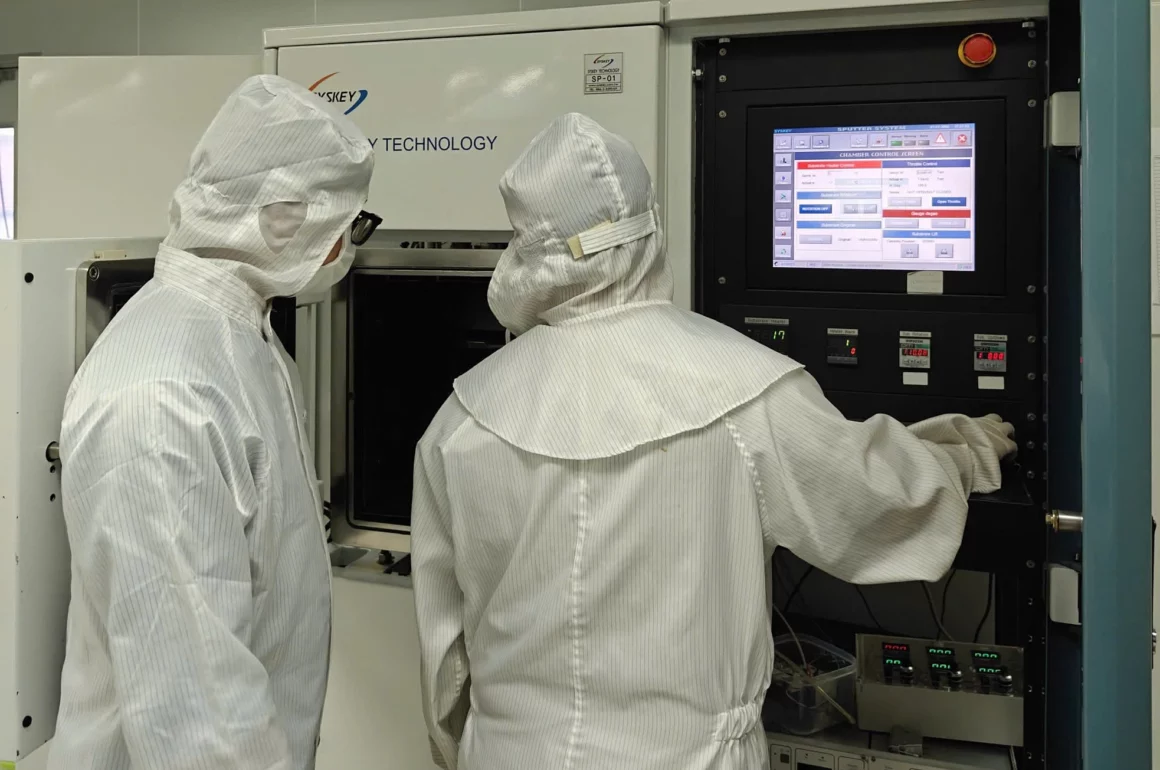
Memristor – linh kiện điện tử có khả năng tính toán và lưu trữ, do các nhà khoa học Việt Nam phát triển, được Văn phòng Sáng chế và Nhãn hiệu Mỹ (USPTO) cấp bằng sáng chế. Linh kiện điện tử dạng mạng thần kinh nhân tạo kích cỡ nhỏ, có khả năng đọc chữ số viết tay, ghép thành từ 256 “memristor” do nhóm nghiên cứu Đại học Quốc gia Hà Nội và TP HCM phát triển. Đây là hướng nghiên cứu được quan tâm trong tính toán mô phỏng não bộ. Trên thế giới hiện có nhiều giải...
Thông tin chung
Mời báo giá gới thầu Mua sắm linh kiện để nâng cấp máy vi tính cho Phòng máy tính thuộc Khoa Toán – Tin học
Thành phố Hồ Chí Minh, ngày 12 tháng 8 năm 2026 Kính gửi: Các hãng sản xuất, nhà cung cấp tại Việt Nam Hiện nay, Trường Đại học Khoa học tự nhiên, ĐHQG-HCM có nhu cầu tiếp nhận báo giá để tham khảo, xây dựng giá gói thầu, làm cơ sở tổ chức lựa chọn nhà thầu gói thầu Mua sắm linh kiện để nâng cấp máy vi tính cho Phòng máy tính thuộc Khoa Toán – Tin học – nội dung chi tiết như file đính kèm0. Yêu cầu báo giá , với thông tin cụ thể như sau:...
Thông tin chung
Mời báo giá gói thầu Mua sắm thiết bị và linh kiện cho Khoa Công nghệ Thông tin, Khoa Địa chất, Khoa Vật lý – Vật lý Kỹ thuật và Phòng Quan hệ Đối ngoại
Thành phố Hồ Chí Minh, ngày 12 tháng 8 năm 2026 Kính gửi: Các hãng sản xuất, nhà cung cấp tại Việt Nam Hiện nay, Trường Đại học Khoa học tự nhiên, ĐHQG-HCM có nhu cầu tiếp nhận báo giá để tham khảo, xây dựng giá gói thầu, làm cơ sở tổ chức lựa chọn nhà thầu gói thầu Mua sắm thiết bị và linh kiện cho Khoa Công nghệ Thông tin, Khoa Địa chất, Khoa Vật lý – Vật lý Kỹ thuật và Phòng Quan hệ Đối ngoại – nội dung chi tiết như file đính kèm , với...
Chương trình đào tạo sau đại học / Nghiên cứu khoa học / Sau đại học / Tin tức
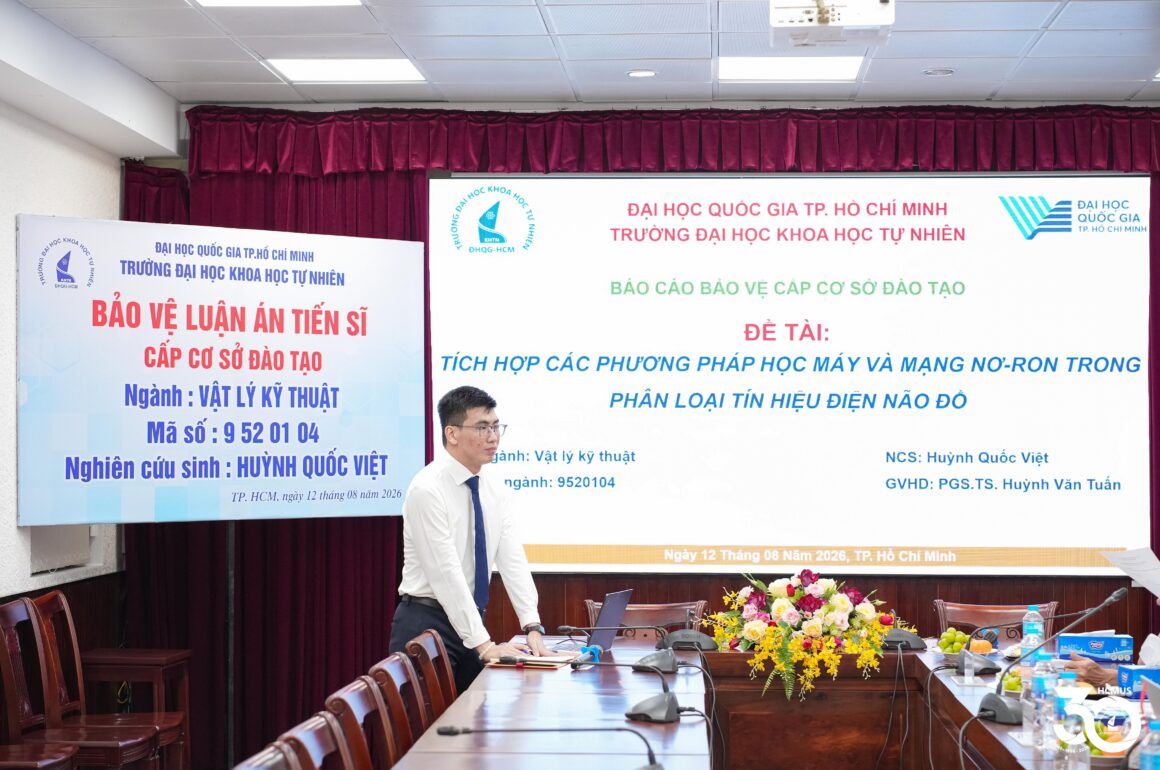
NCS. Huỳnh Quốc Việt bảo vệ thành công luận án tiến sĩ ngành Vật lý kỹ thuật về phân loại tín hiệu điện não đồ
Ngày 12/8/2026, tại Trường Đại học Khoa học tự nhiên, ĐHQG-HCM, NCS. Huỳnh Quốc Việt đã bảo vệ thành công luận án tiến sĩ cấp cơ sở đào tạo ngành Vật lý kỹ thuật với đề tài “Tích hợp các phương pháp học máy và mạng nơ-ron trong phân loại tín hiệu điện não đồ”, dưới sự hướng dẫn khoa học của PGS.TS. Huỳnh Văn Tuấn. Luận án tập trung nghiên cứu việc tích hợp xử lý tín hiệu, học máy và học sâu nhằm nâng cao hiệu quả phân loại tín hiệu điện não đồ (EEG) – loại tín...