
Abstract Lead acid batteries operate more efficiently by increasing hydrogen evolution overpotential. Battery performance is enhanced by adding graphitic carbon nitride (g-C3N4) and carbon black (CB). The CB-g-C3N4 composite material inhibited hydrogen gas evolution by increasing the overpotential of the reaction. The bilayer configuration of g-C3N4 stabilized nitrogen defect sites in a planar arrangement, introducing an additional energy barrier. The 25% and 50% g-C3N4 exhibited elevated overpotential relative to pure carbon material,...

Danh mục: Bài báo khoa học
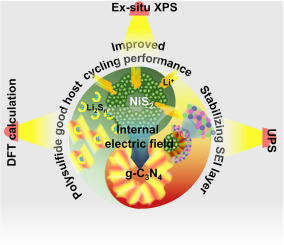
A new insight into high-performance NiS2@g-C3N4 anode for lithium-ion batteries – a DFT calculation and ex-situ XPS approach
Abstract Various transition metal sulfides have been considered alternatives for graphite in the anode of lithium-ion batteries. However, poor cycling property caused by polysulfide dissolution and structure devastation hinders their practical applications. In this work, the NiS2 has been coated by a g-C3N4 layer using a facile gas-solid state reaction for a durable-cycling-performance anode for lithium-ion batteries. The composite...
HGCT: Enhancing temporal knowledge graph reasoning through extrapolated historical fact extraction
Abstract Extrapolation on Temporal Knowledge Graphs (TKGs) poses a critical obstacle, garnering significant attention in the academic sphere due to its far-reaching implications across various domains and areas of study. Predicting upcoming events through the analysis of historical data involves a complex task that requires the integration of structural patterns from historical graph data and...
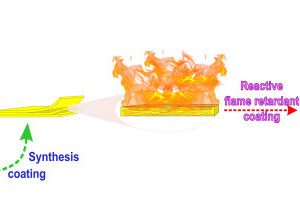
Novel reactive flame-retardant coating prepared from waste polyethylene terephthalate, phenylphosphonic acid, and novolac glycidyl ether
Abstract As global production and consumption of poly(ethylene terephthalate) (PET) becomes higher, so does the amount of waste PET. Several methods of waste PET reduction like mechanical and chemical recycling have been investigated. In this report, we selected the new chemical recycling of PET by transesterification reaction with adipic acid to regain terephthalic acid and...
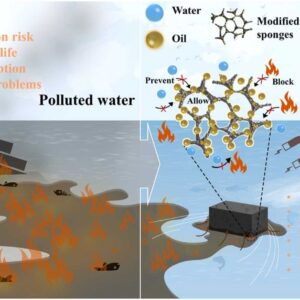
Novel eco-friendly polyurethane sponge: A sustainable alternative to petroleum-based material in flame retardancy, oil-water separation, and emulsion purification for oil spill remediation
Abstract Despite recent advancements in materials and strategies for oil spill remediation, challenges remain in handling the harsh conditions of oil–water separation and enabling the efficient recovery of oil-adsorbing materials. This study reports a facile and effective method to functionalize green-based polyurethane sponge (g-PUS), offering a sustainable alternative to petroleum-based polyurethane sponge (p-PUS), making it...
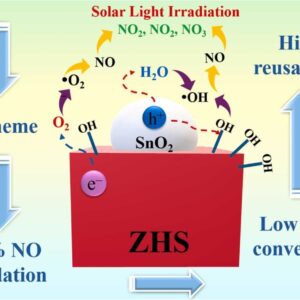
Interfacial engineering of ZnSn(OH)6/SnO2 S-scheme heterojunctions for high-performance solar-light-driven photocatalytic nitric oxide oxidation
Abstract In this study, S-scheme heterojunction photocatalysts composed of SnO2 and ZnSn(OH)6 (ZHS) were synthesized via a one-step hydrothermal method. The resulting ZHS/SnO2 (ZS) composites exhibited high crystallinity, enhanced light-harvesting capability, and a well-defined interfacial architecture, all of which synergistically facilitated efficient charge carrier separation through an n–n type step-scheme (S-scheme) mechanism. The enhanced photocurrent response confirmed accelerated...
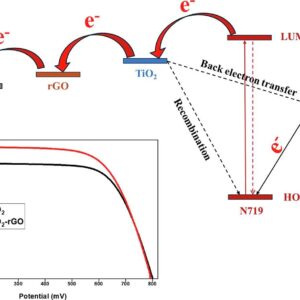
Surface modification of TiO2 photoanode in dye-sensitized solar cells using reduced graphene oxide: A computational and experimental study
Abstract This study investigated the modification of TiO2 photoanodes using reduced graphene oxide (rGO) to enhance electron transport channels and prevent recombination processes, thereby improving the photovoltaic performance. Through the ultraviolet (UV)-assisted photoreduction of GO on TiO2 coated on a fluoride tin oxide substrate (FTO|TiO2), we demonstrated the successful integration of rGO. This was evidenced by the increased Csp2 content observed during X-ray photoelectron spectroscopy...
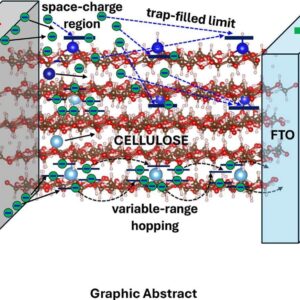
Tuning the resistive switching behavior of sputtered-metal-functionalized cellulose layer in Metal/Cellulose/FTO structure
Abstract Cellulose-based electronic devices show great potential for the development of advanced green electronics, such as digital resistive switching (RS) memory and analog RS artificial synapses. Previous studies on two-terminal devices have primarily used cellulose as a channel for the formation and rupture of metallic conductive filaments that directly govern the RS behavior. This means...
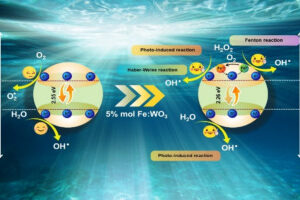
Promoting the role of Fe doping in WO3 toward enhancing H2O2 oxidation ability for contaminant degradation
Abstract The WO3 semiconductor emerges as a photocatalytic material of remarkable potential in harnessing solar radiation absorption capabilities, with promising applications in the photocatalytic treatment of organic compounds. Nonetheless, a primary limitation in the fast recombination of photogenerated electrons and holes is caused by an ill-suited ECBM energy level, resulting in electrons not reacting with dissolved oxygen....
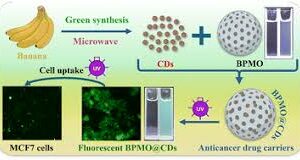
Biogenic fluorescent carbon dot-decorated mesoporous organosilica nanoparticles for enhanced bioimaging and chemotherapy
Abstract Hybrid materials possess the unique properties of their individual components, enabling their use in multiple synergistic applications. In this study, we synthesized biogenic fluorescent carbon dots (CDs) decorated with biodegradable periodic mesoporous organosilica nanoparticles (BPMO), creating BPMO@CDs. The CDs, approximately 9.8 nm in diameter, were derived from Musa paradisiaca cv. Awak juice using a rapid microwave method, exhibiting...