
Phòng Quan hệ Đối ngoại kính thông tin về Chương trình InnovaConnect năm 2026, với chủ đề “Catalyzing Innovation in Chemistry and Drug Discovery” Chương trình được thực hiện theo Kế hoạch số 2196/KH-ĐHQG ngày 03/9/2026 của ĐHQG-HCM về tổ chức chương trình InnovaConnect năm 2026, với chủ đề “Catalyzing Innovation in Chemistry and Drug Discovery”. Thông tin sơ bộ như sau: – Thời gian: 08g30 – 11g30 Thứ Năm, ngày 01/10/2026 – Địa điểm: Hội trường Trần Chí Đáo, Nhà điều hành ĐHQG-HCM. – Diễn giả: + Giáo sư David MacMillan – Đại học Princeton (Hoa Kỳ), chủ...
Báo chí viết về HCMUS / Story
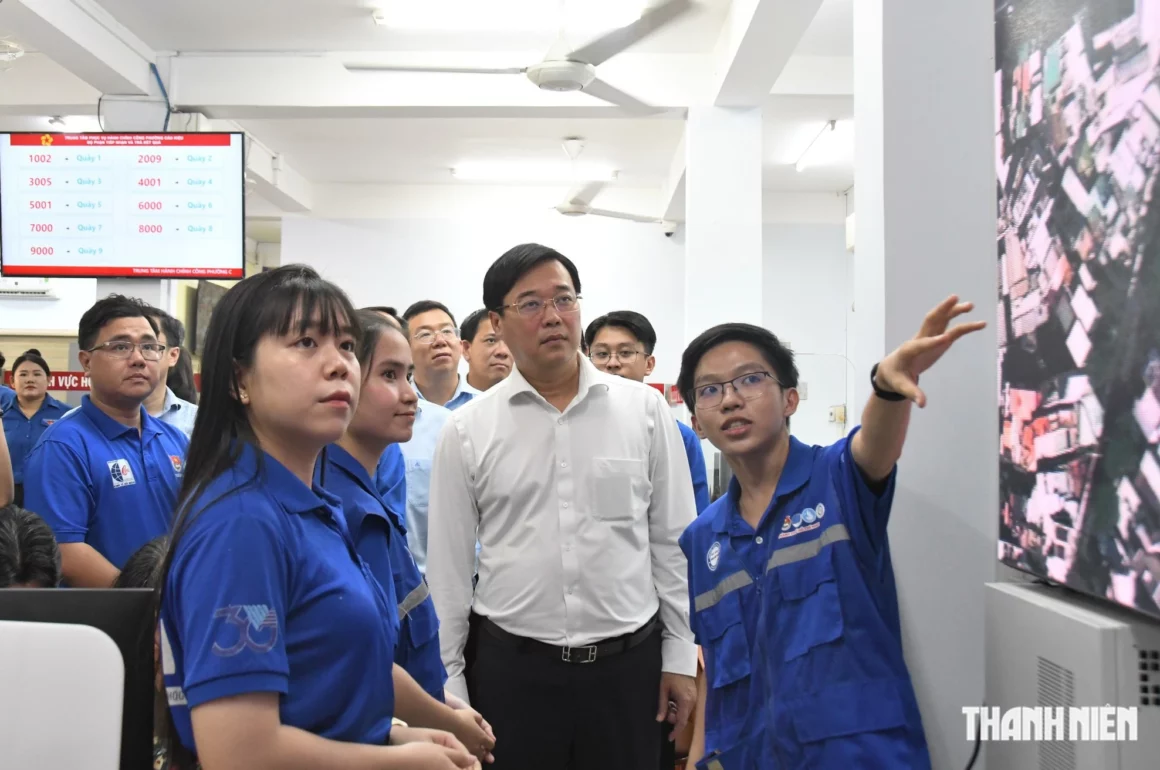
Sinh viên dùng năng lực công nghệ giải quyết những vấn đề của xã hội
“Mùa hè số” của TP.HCM tạo môi trường giúp sinh viên đưa tinh thần Nghị quyết 57-NQ/TW vào cuộc sống. Trong đó, đội hình “Mùa hè số” của Trường ĐH Khoa học tự nhiên, ĐH Quốc gia TP.HCM, đã biến kiến thức chuyên môn và năng lực công nghệ thành những giá trị thiết thực, giải quyết các vấn đề thực tế trong xã hội. Võ Minh Đăng, Chủ tịch Hội Sinh viên Trường ĐH Khoa học tự nhiên, ĐH Quốc gia TP.HCM, khẳng định: “Từ một chiến dịch tình nguyện, tụi mình muốn chứng minh rằng sinh viên không...
Báo giá
Mời báo giá hạng mục Sửa chữa cơ sở vật chất cho các hạng mục dùng chung tại cơ sở Đông Hòa
Thành phố Hồ Chí Minh, ngày 21 tháng 9 năm 2026 Kính gửi: Các đơn vị thi công tại Việt Nam Hiện nay, Trường Đại học Khoa học tự nhiên, ĐHQG-HCM có nhu cầu tiếp nhận báo giá để tham khảo, xây dựng giá gói thầu, làm cơ sở tổ chức lựa chọn nhà thầu gói thầu Sửa chữa cơ sở vật chất cho các hạng mục dùng chung tại cơ sở Đông Hòa, nội dung chi tiêt như file đính kèm với thông tin cụ thể như sau:. Yêu cầu báo giá Thông tin của đơn vị yêu cầu...
Sau đại học / Thông tin chung / Tin tức
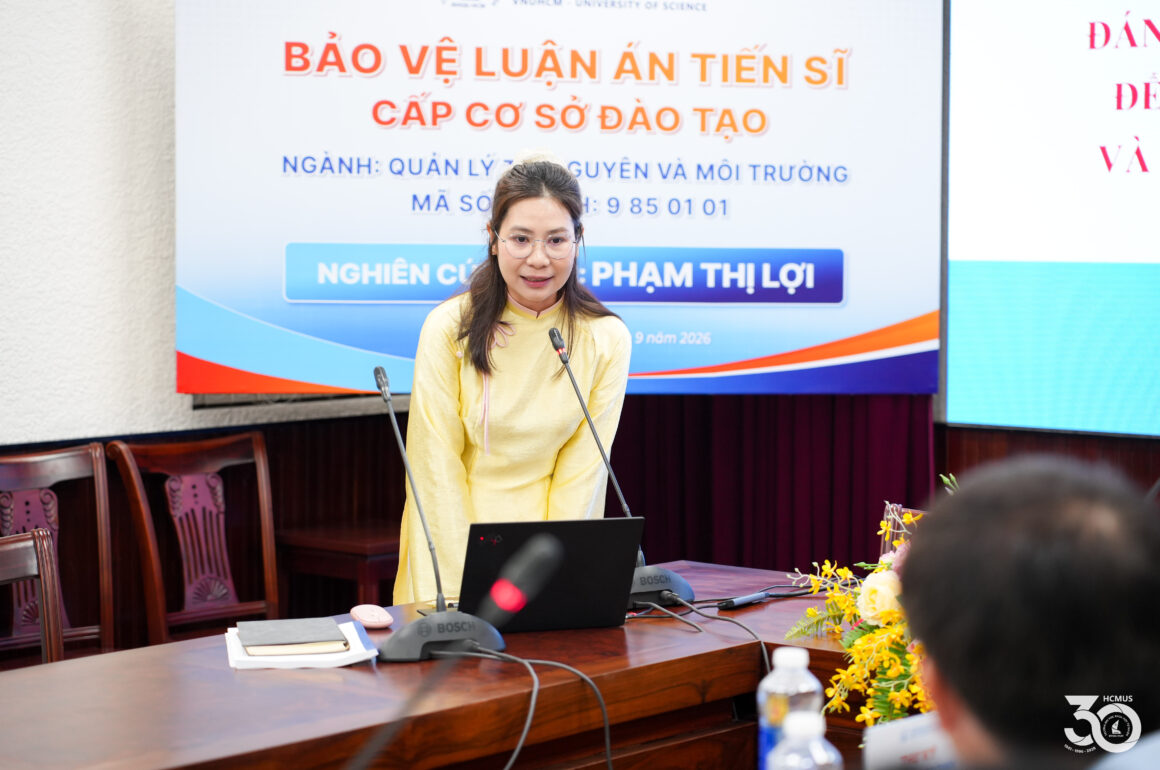
NCS. Phạm Thị Lợi bảo vệ thành công luận án tiến sĩ về đánh giá tác động của biến đổi khí hậu đến năng suất cây cà phê tại Tây Nguyên
Sáng ngày 19/09, tại Trường Đại học Khoa học tự nhiên, ĐHQG-HCM, nghiên cứu sinh (NCS.) Phạm Thị Lợi đã bảo vệ thành công luận án tiến sĩ ngành Quản lý Tài nguyên và Môi trường với đề tài “Đánh giá tác động của biến đổi khí hậu đến đặc điểm khí tượng nông nghiệp và năng suất cây cà phê ở Tây Nguyên”. Luận án được thực hiện dưới sự hướng dẫn khoa học của cố PGS.TS. Đào Nguyên Khôi và PGS.TS. Nguyễn Thị Bảy. Quá trình nghiên cứu của NCS. Phạm Thị Lợi thể hiện năng lực chuyên...
Học bổng Sau đại học / Tin tức
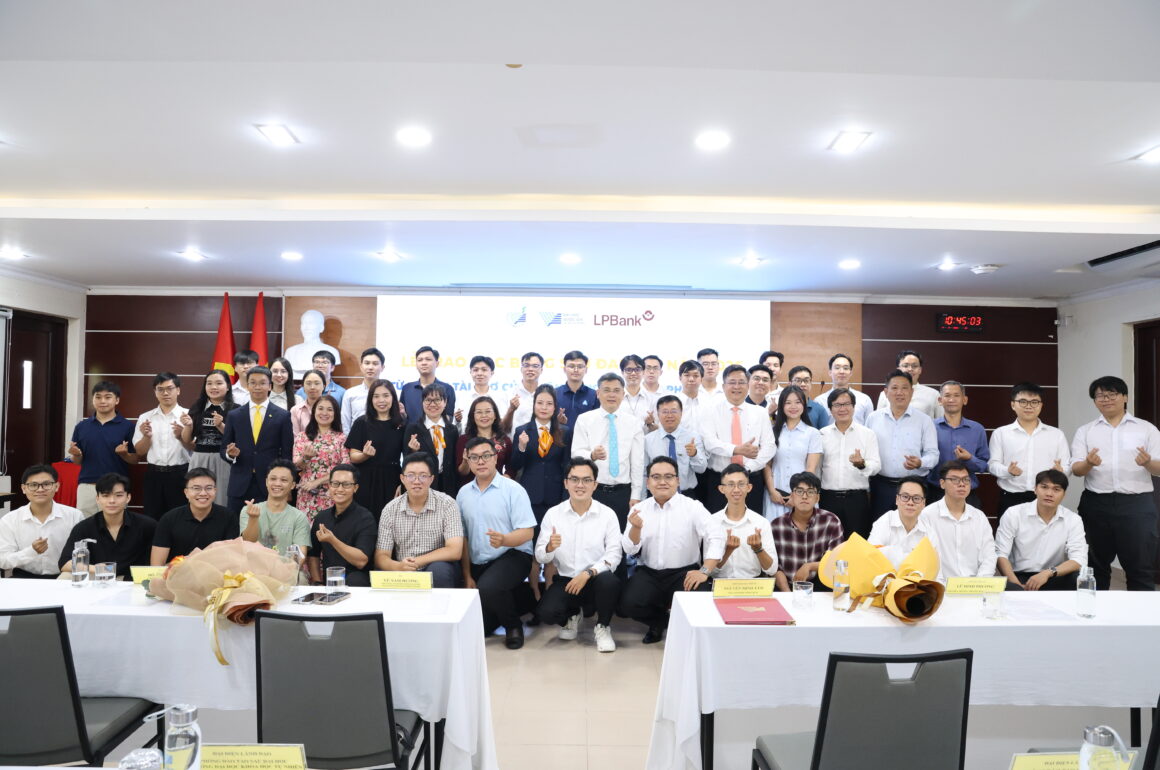
Trường Đại học Khoa học tự nhiên nhận 23 suất học bổng sau đại học lĩnh vực bán dẫn, thiết kế vi mạch
Ngày 19/9/2026, tại ĐHQG-HCM, 23 học viên cao học của Trường Đại học Khoa học tự nhiên được trao học bổng sau đại học năm 2026 từ nguồn tài trợ LPBank, với tổng trị giá 1,035 tỷ đồng. Học bổng góp phần hỗ trợ người học tiếp tục học tập, nghiên cứu trong lĩnh vực công nghệ bán dẫn và thiết kế vi mạch. Trong tổng số 43 suất học bổng được trao trong năm 2026, Trường Đại học Khoa học tự nhiên nhận 23 suất, mỗi suất trị giá 45 triệu đồng, với tổng kinh phí 1,035 tỷ đồng....
Báo giá
Mời báo giá hạng mục Sửa chữa và cung cấp trang thiết bị cho Thư viện, Khoa Hóa học, Khoa Sinh học – Công nghệ Sinh học và các phòng chức năng
Thành phố Hồ Chí Minh, ngày 19 tháng 9 năm 2026 Kính gửi: Các đơn vị thi công tại Việt Nam Hiện nay, Trường Đại học Khoa học tự nhiên, ĐHQG-HCM có nhu cầu tiếp nhận báo giá để tham khảo, xây dựng giá gói thầu, làm cơ sở tổ chức lựa chọn nhà thầu gói thầu Sửa chữa và cung cấp trang thiết bị cho Thư viện, Khoa Hóa học, Khoa Sinh học – Công nghệ Sinh học và các phòng chức năng, với thông tin cụ thể như sau: Thông tin của đơn vị yêu cầu báo giá:...
Lịch công tác
“LỊCH SỬ DỤNG PHÒNG HỌP (Tuần 21/09/2026 đến 27/09/2026)”
Ngày Giờ Địa điểm Nội dung cuộc họp Đơn vị chuẩn bị Thành phần tham dự Thứ 2 21/09/2026 13:30 F.102 Hội nghị thực hiện quy trình giới thiệu nhân sự kiện toàn, bổ sung Ủy viên Ban Thường vụ Đảng ủy Trường Đại học Khoa học tự nhiên nhiệm kỳ 2025 – 2030 Văn phòng Đảng ủy – Đại diện Ban Thường vụ Đảng ủy ĐHQGĐại diện Ban Tổ chức Đảng ủy ĐHQG-HCM; Đại diện Ủy ban Kiểm tra Đảng ủy ĐHQG-HCM; Ban Chấp hành Đảng bộ Trường Thứ 3 22/09/2026 09:00 I.12 Họp Hội đồng nghiệm thu đề...
Học bổng Đại học / Thông tin dành cho sinh viên
Thông báo kết quả chính thức HBKK HK2/2025-2026 Khoa Công nghệ Thông tin, Điện tử-Viễn thông, Hóa học, Khoa học&CNVL, Môi trường, Sinh học-CNSH, Vật lý-VLKT (CTĐA)
THÔNG BÁO Kết quả chính thức học bổng khuyến khích HK2/2025-2026 dành cho SV Chương trình Đề án Khoa Công nghệ Thông tin, Điện tử-Viễn thông, Khoa Hóa học, Khoa Khoa học&Công nghệ Vật liêu, Khoa Môi trường, Khoa Sinh học-Công nghệ Sinh học, Khoa Vật lý – Vật lý Kỹ thuật _________________________ Trường Đại học Khoa học tự nhiên thông báo danh sách chính thức SV các Chương trình Đề án (CTĐA) Khoa Công nghệ Thông tin, Khoa Điện tử-Viễn thông, Khoa Hóa học, Khoa Khoa học&Công nghệ Vật liệu, Khoa Môi trường, Khoa Sinh...
Báo giá
Mời báo giá Cung cấp hàng hóa phục vụ giảng dạy đề tài tốt nghiệp Khoa Hóa học HK2, 3 năm học 2026-2027
Kính gửi: Các đơn vị cung cấp, Hiện nay, Trường Đại học Khoa học tự nhiên, ĐHQG-HCM có nhu cầu tiếp nhận báo giá để tham khảo, xây dựng giá gói thầu, làm cơ sở tổ chức lựa chọn nhà thầu cung cấp hàng hóa phục vụ giảng dạy đề tài tốt nghiệp Khoa Hóa học HK2, 3 năm học 2026-2027. File báo giá đính kèm: 2026 Yêu cầu báo giá hàng hóa – ĐTTN – CLC-CKH Phụ lục YCBG I. Thông tin của đơn vị yêu cầu báo giá: Yêu cầu đơn vị báo giá tuân thủ theo số...
Thông tin chung
NÂNG CAO QUYỀN TỰ CHỦ VÀ TRÁCH NHIỆM GIẢI TRÌNH TRONG GIÁO DỤC ĐẠI HỌC THEO NGHỊ ĐỊNH 334/2026/NĐ-CP
NÂNG CAO QUYỀN TỰ CHỦ VÀ TRÁCH NHIỆM GIẢI TRÌNH TRONG GIÁO DỤC ĐẠI HỌC THEO NGHỊ ĐỊNH 334/2026/NĐ-CP Nhằm thực thi hiệu quả quyền tự chủ gắn liền với trách nhiệm giải trình trong toàn bộ hoạt động đào tạo và quản trị đại học, Điều 4 Nghị định 334/2026/NĐ-CP quy định cụ thể các nội dung tự chủ và nghĩa vụ cốt lõi của cơ sở giáo dục đại học như sau: Tự chủ về chương trình đào tạo và học liệu Nhà trường chủ động quyết định chuẩn đầu ra, cấu trúc, nội dung chương trình đào...