



Abstract
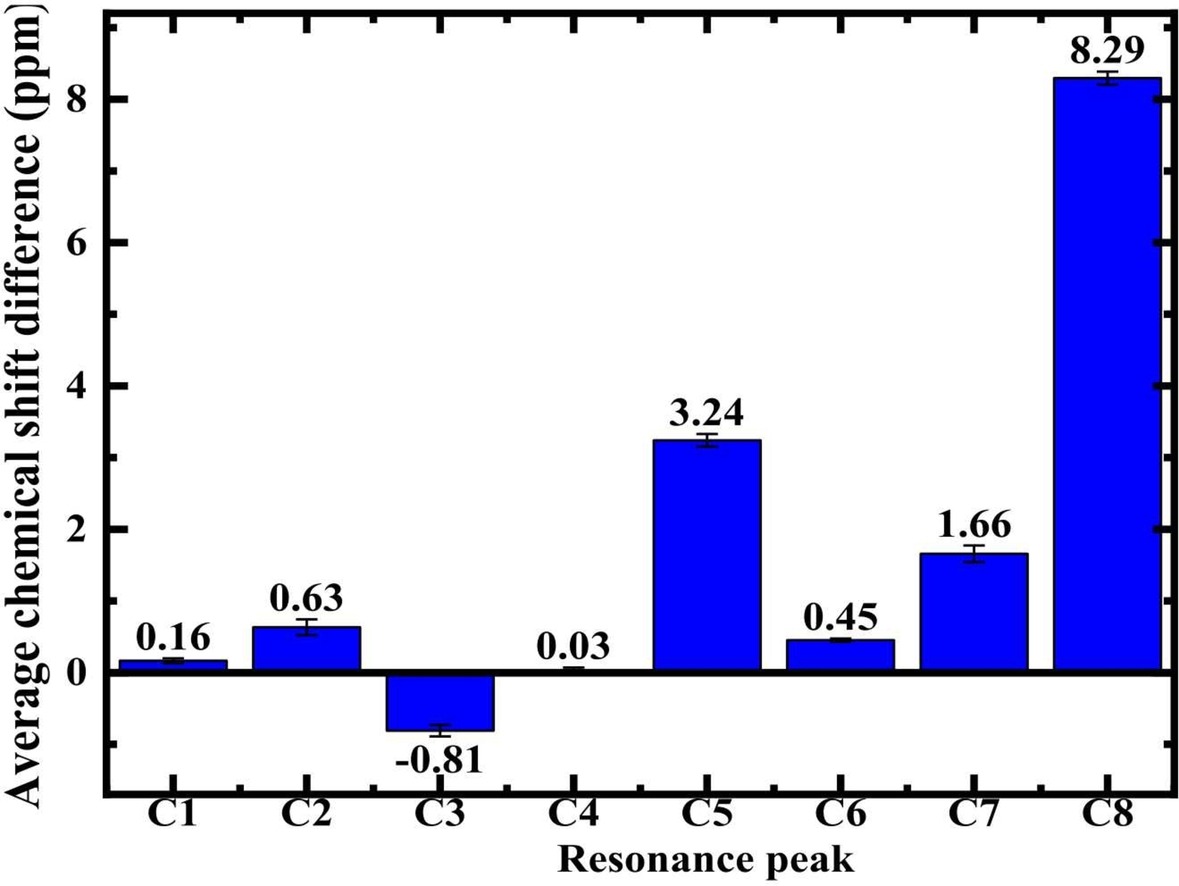
The chemical and microstructural features of poly(styrenesulfonic acid) (PSSA)-grafted poly(ethylene-co-tetrafluoroethylene) (ETFE) polymer electrolyte membranes (ETFE-PEMs) through preparation procedures and grafting degree (GD) are investigated by solid-state 13C cross polarization/magic angle spinning solid-state nuclear magnetic resonance (13C CP/MAS NMR) spectra, atomic force microscope (AFM), X-ray diffraction (XRD), and Doppler broadening (DB) of positron-annihilation radiation measurement. Especially, sequential order in the structural changes as a response to GD increase is discussed in detail by using the two-dimensional correlation spectroscopy (2D-CS) analyses. The grafting process at –CH2 sites occurs earlier than that at –CF2 ones. The chemical degradation of ETFE-PEMs (even at a low GD of 8.8 %) observed previously is found to result from mainly the chemical nature rather than the swelling-induced stress. All the ETFE-PEMs show the high dimensional stability and low swelling behavior due to the highly ordered crystalline structures and the unique distribution of PSSA chains within the bulk and on the surface of membranes. The 2D-CS XRD analyses reveal that the newly generated crystallites are formed around (200) planes at low GD and then degrade at higher GDs while main (120) planes decline monotonically with GD. In particular, the increase in S parameter obtained from the DB spectra indicates the formation of the newly generated amorphous phase of only graft chains.
Graphical Abstract
Nguyen, H.M.T., Lam, H.H., Tran, T.D. and Tran, D.T. (2026) Materials Today Communications, 50, p. 114586.