
THƯ MỜI CHÀO GIÁ Kính gửi: Quý Công ty/Doanh nghiệp Trường Đại học Khoa học tự nhiên, ĐHQG-HCM có nhu cầu tiếp nhận báo giá để tham khảo, xây dựng giá gói thầu, làm cơ sở tổ chức lựa chọn nhà thầu gói thầu: Dịch vụ tư vấn – Thẩm định E-HSMT và kết quả lựa chọn nhà thầu gói thầu mua sắm trang thiết bị thuộc Dự án thành phần 2: Phòng thí nghiệm Năng lượng tái tạo tiên tiến và năng lượng hạt nhân, thuộc dự án Phòng thí nghiệm Năng lượng tái tạo tiên tiến và hạt...
Báo giá
Thư mời chào giá – Dịch vụ tư vấn lập E-HSMT và đánh giá E-HSDT gói thầu mua sắm trang thiết bị thuộc Dự án thành phần 2: Phòng thí nghiệm Năng lượng tái tạo tiên tiến và năng lượng hạt nhân, thuộc dự án Phòng thí nghiệm Năng lượng tái tạo tiên tiến và hạt nhân
THƯ MỜI CHÀO GIÁ Kính gửi: Quý Công ty/Doanh nghiệp Trường Đại học Khoa học tự nhiên, ĐHQG-HCM có nhu cầu tiếp nhận báo giá để tham khảo, xây dựng giá gói thầu, làm cơ sở tổ chức lựa chọn nhà thầu gói thầu: Dịch vụ tư vấn lập E-HSMT và đánh giá E-HSDT gói thầu mua sắm trang thiết bị thuộc Dự án thành phần 2: Phòng thí nghiệm Năng lượng tái tạo tiên tiến và năng lượng hạt nhân, thuộc dự án Phòng thí nghiệm Năng lượng tái tạo tiên tiến và hạt nhân, (đính kèm file 2026...
Báo giá
Thư mời chào giá gói thầu: Dịch vụ tư vấn lập E-HSMT và đánh giá E-HSDT gói thầu mua sắm trang thiết bị thuộc dự án thành phần 2: Phòng thí nghiệm đổi mới sáng tạo dựa trên trí tuệ nhân tạo, dữ liệu lớn, tính toán, vật liệu tiên tiến và tương tác thông minh
Kính gửi: Quý Công ty/Doanh nghiệp Hiện nay, Trường Đại học Khoa học tự nhiên, ĐHQG-HCM có nhu cầu tiếp nhận báo giá để tham khảo, xây dựng giá gói thầu, làm cơ sở tổ chức lựa chọn nhà thầu gói thầu: Dịch vụ tư vấn lập E-HSMT và đánh giá E-HSDT gói thầu mua sắm trang thiết bị thuộc dự án thành phần 2: Phòng thí nghiệm đổi mới sáng tạo dựa trên trí tuệ nhân tạo, dữ liệu lớn, tính toán, vật liệu tiên tiến và tương tác thông minh, (đính kèm file: 2026 Thư mời chào giá...
Đối tác / Hợp tác quốc tế / Tin tức
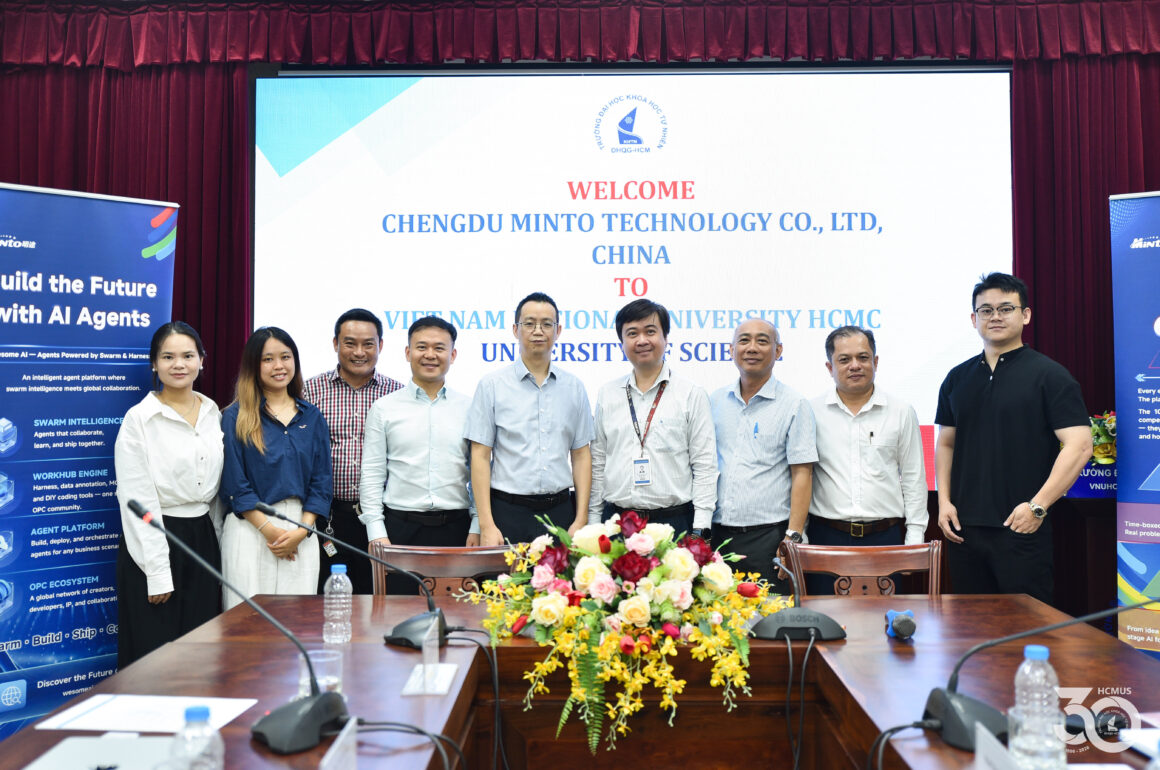
Trường Đại học Khoa học tự nhiên, ĐHQG-HCM trao đổi hợp tác với Chengdu Minto Technology
Ngày 18/8/2026, Trường Đại học Khoa học tự nhiên, ĐHQG-HCM có buổi làm việc với đoàn đại biểu Công ty Chengdu Minto Technology Co., Ltd. (Trung Quốc), nhằm trao đổi định hướng hợp tác trong lĩnh vực công nghệ, trí tuệ nhân tạo (AI), giáo dục và đào tạo. Tham dự buổi làm việc, về phía Trường Đại học Khoa học tự nhiên, ĐHQG-HCM có PGS.TS. Trần Minh Triết – Phó Hiệu trưởng; GS.TS. Ngô Đại Nghiệp – Trưởng phòng Quan hệ Đối ngoại; TS. Quan Quốc Đăng – đại diện Phòng Khoa học Công nghệ. Đoàn đại biểu Chengdu...
Thông tin chung / Thông tin dành cho sinh viên
Thông báo về việc kiểm tra Anh văn đầu khóa, quy định học tiếng Anh và chuẩn ngoại ngữ đầu ra đối với sinh viên khóa 2026
Tân sinh viên xem thông báo về kiểm tra Anh văn đầu khóa trong link sau đây: Link Thong bao kiem tra Anh van dau khoa Các Quyết định về chuẩn đầu ra ngoại ngữ đối với sinh viên khóa 2026: Chương trình đại trà, tài năng: QĐ 2464_QĐ chuẩn NN 2026_ĐT_TN Chương trình tăng cường tiếng Anh: QĐ 2465_QĐ chuẩn NN 2026_de an cac nganh_tru CNTT Chương trình tăng cường tiếng Anh ngành Công nghệ thông tin: QĐ 2466_QĐ chuẩn NN 2026_CNTT TCTA Chương trình tiên tiến ngành Khoa học máy tinh: QĐ 2467_QĐ chuẩn NN 2026_KHMT_TT
Viên chức - Người lao động
QUY ĐỊNH PHÂN LOẠI VÀ XẾP HẠNG ĐƠN VỊ SỰ NGHIỆP CÔNG LẬP THEO NGHỊ ĐỊNH 299/2026/NĐ-CP
Nghị định 299/2026/NĐ-CP ngày 28/7/2026 của Chính phủ ban hành Nghị định quy định tổ chức đơn vị sự nghiệp công lập có hiệu lực từ 28/7/2026 quy định việc phân loại và xếp hạng đơn vị sự nghiệp công lập (ĐVSNCL) là căn cứ quan trọng để Nhà nước giao nhiệm vụ, nâng cao tính tự chủ và hiệu quả hoạt động (Điều 7, Điều 8). Về phân loại đơn vị: Các ĐVSNCL được phân chia dựa trên 04 tiêu chí chính: vị trí pháp lý; lĩnh vực hoạt động (như giáo dục, y tế); tính chất nhiệm vụ...
Thông tin chung
Mời báo giá Cung cấp Vé máy bay khứ hồi từ Thành phố Hồ Chí Minh đến Hà Lan cho đoàn công tác của Khoa Điện tử – Viễn thông thuộc Trường Đại học Khoa học tự nhiên, ĐHQG-HCM từ ngày 22/8/2026 – 30/8/2026
Kính gửi: Các đại lý cung cấp vé máy bay tại Việt Nam, Hiện nay, Trường Đại học Khoa học tự nhiên, ĐHQG-HCM có nhu cầu tiếp nhận báo giá để làm cơ sở tổ chức lựa chọn nhà thầu cung cấp Vé máy bay khứ hồi từ Thành phố Hồ Chí Minh đến Hà Lan cho đoàn công tác của Khoa Điện tử – Viễn thông thuộc Trường Đại học Khoa học tự nhiên, ĐHQG-HCM từ ngày 22/8/2026 – 30/8/2026. Nội dung báo giá: Tải về I. THÔNG TIN CỦA ĐƠN VỊ YÊU CẦU BÁO GIÁ: Yêu cầu đơn...
Viên chức - Người lao động
TỪ 01/7/2026 KHÔNG CÒN HẠNG CHỨC DANH NGHỀ NGHIỆP VỚI VIÊN CHỨC
TỪ 01/7/2026 KHÔNG CÒN HẠNG CHỨC DANH NGHỀ NGHIỆP VỚI VIÊN CHỨC Chính phủ ban hành Nghị định 232/2026/NĐ-CP quy định về vị trí việc làm viên chức, đánh dấu bước chuyển đổi quan trọng trong công tác quản lý nhân sự tại các đơn vị sự nghiệp công lập, đặc biệt là các cơ sở giáo dục đại học. Kể từ ngày 01/7/2026, hệ thống quản lý viên chức theo “hạng chức danh nghề nghiệp” cũ sẽ chính thức được thay thế bằng hệ thống “bậc nghề nghiệp” gắn với vị trí việc làm. Bậc nghề nghiệp: Thước đo năng lực thực...
Nghiên cứu / Thông tin chung / Thông tin hoạt động Khoa học - Công nghệ
THÔNG BÁO ĐỀ XUẤT ĐẶT HÀNG NHIỆM VỤ KHOA HỌC VÀ CÔNG NGHỆ THỰC HIỆN NĂM 2026 ĐỢT 2 VÀ NĂM 2027 TỈNH AN GIANG
THÔNG BÁO ĐỀ XUẤT ĐẶT HÀNG NV KHCN 2026 ĐỢT 2 VÀ 2027 TỈNH AN GIANG Mau BM-01
Báo giá
Mời báo giá gói thầu cung cấp dụng cụ vệ sinh và văn phòng phẩm cho hai cơ sở Nguyễn Văn Cừ và Đông Hòa
Thành phố Hồ Chí Minh, ngày 17 tháng 8 năm 2026 Kính gửi: Các hãng sản xuất, nhà cung cấp tại Việt Nam Hiện nay, Trường Đại học Khoa học tự nhiên, ĐHQG-HCM có nhu cầu tiếp nhận báo giá để tham khảo, xây dựng giá gói thầu, làm cơ sở tổ chức lựa chọn nhà thầu gói thầu Mua sắm dụng cụ vệ sinh và văn phòng phẩm cho hai cơ sở Nguyễn Văn Cừ và Đông Hòa – nội dung chi tiết như file đính kèm :0. Yêu cầu báo giá Thông tin của đơn vị yêu cầu...